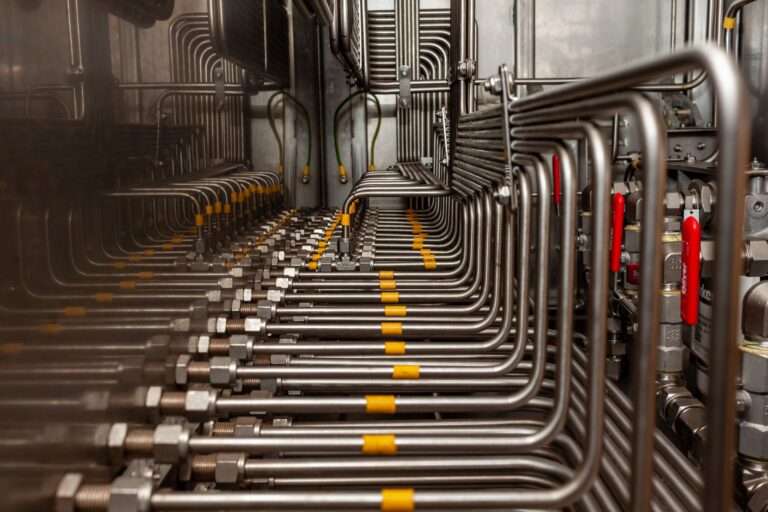
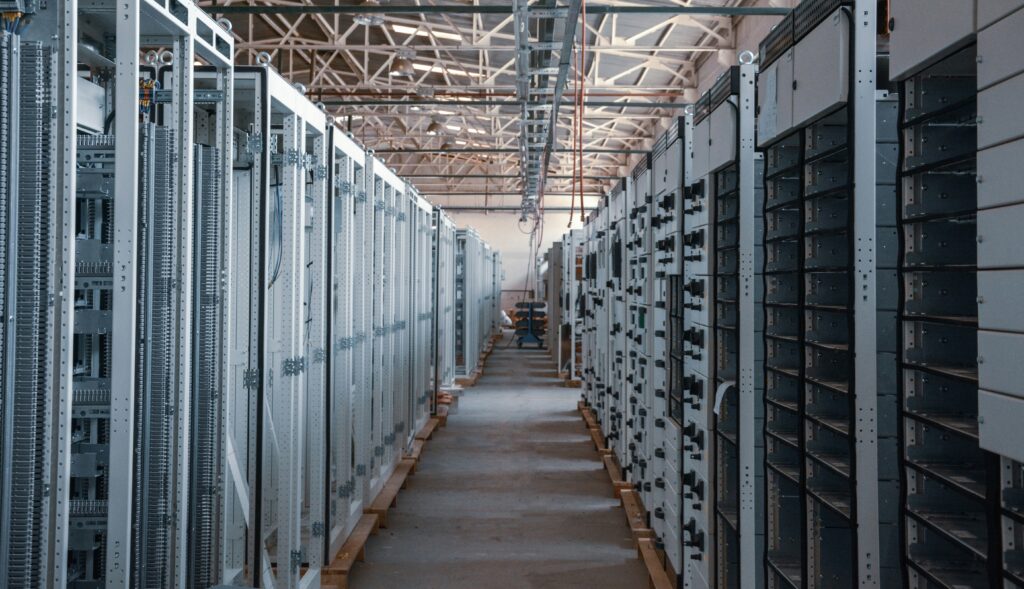
As high-density AI computing pushes traditional air-cooling past its limits, data centers increasingly rely on advanced liquid-cooling infrastructure. Managing these intense thermal loads requires cold plates and tubing manifolds with intricate internal geometries designed to maximize heat transfer.
Manufacturing these complex thermal components requires a reliable metal-joining method. Because these assemblies feature microscopic internal passages, the specific manufacturing process chosen plays a critical role in supporting the long-term operational reliability of the system.
The Danger of Flux Contamination in Micro-Channels
Traditional brazing methods rely on chemical fluxes to remove surface oxides and allow the filler metal to flow. In standard industrial applications, post-process cleaning can typically wash away this residue. However, liquid-cooling cold plates often feature internal micro-channels and exceptionally tight internal clearways that are difficult to access after assembly.
When flux is introduced into these complex internal geometries, it introduces severe operational risks:
- Internal Blockages: Residual flux can harden inside micro-channels, restricting fluid flow and creating localized hot spots on the server processor.
- Coolant Contamination: Over time, closed-loop cooling fluids can cause embedded flux residue to break loose, traveling through the system and potentially fouling pumps or valves.
- Accelerated Corrosion: Chemical flux residues are inherently corrosive. If trapped within the internal joints of a manifold or cold plate, they can weaken the metal structure from the inside out.
The Advantage of Controlled Atmosphere, Flux-Free Brazing
To mitigate the risks associated with chemical contaminants, electronic infrastructure designers specify flux-free manufacturing processes. Franklin Brazing utilizes automated continuous mesh belt furnaces operating with a controlled atmosphere to achieve clean, bright assemblies without utilizing chemical fluxes.
Uniform Heating Profiles
Our continuous mesh belt furnaces pass the cold plate assemblies through highly controlled temperature zones. This uniform thermal profile supports a consistent environment where the entire assembly reaches the proper brazing temperature uniformly, reducing internal stresses and supporting flat, dimensionally stable surfaces necessary for optimal contact with thermal interface materials.
Capillary Action Without Residues
By replacing oxygen with a controlled protective atmosphere, surface oxidation is prevented naturally during the heating cycle. The filler metal draws through the joint clearance via capillary action, establishing a repeatable metallurgical bond that remains bright, clean, and completely free of internal chemical particulates.
High-Volume Scalability for Digital Infrastructure
The demand for data center infrastructure requires manufacturing partners who can scale from prototype validation to high-volume production runs. Continuous belt processing is inherently designed for throughput, allowing thousands of liquid-cooling manifolds or cold plate assemblies to be processed efficiently in a continuous cycle.
This automated furnace process reduces the operational variations common in manual torch brazing or localized welding. By stabilizing process variables, controlled atmosphere belt brazing provides data center component manufacturers with the high repeatability needed to satisfy strict industry quality requirements and customer-designed specifications.
Your Strategic Partner for Clean Thermal Management
Franklin Brazing delivers the specialized furnace capabilities and manufacturing experience required to support advanced computing infrastructure. Our flux-free, controlled atmosphere process is specifically optimized to support the cleanliness of delicate internal fluid passages, minimizing the risk of contamination and blockages. We work closely with your engineering and procurement teams to ensure our automated capabilities support your dimensional specifications and volume targets.
Contact Franklin Brazing today to discuss your liquid-cooling manifold, tubing assembly or thermal management component project and learn how our flux-free continuous belt processing can add reliability to your supply chain.
Disclaimer: Brazing process suitability, joint performance, and final component qualification depend on customer application-specific design, materials, operating conditions, and customer validation requirements. Final component qualification and system compatibility validation remain the responsibility of the customer.