In flight, components face pressures that test the absolute limits of material science. Engineers are constantly tasked with a difficult contradiction: components must be lighter than ever, yet strong enough to withstand extreme thermal cycling and high-pressure environments. When conventional welding falls short due to material thickness or complex geometries, precision brazing becomes the vital solution.
The Engineering Challenge: Managing Thermal Distortion
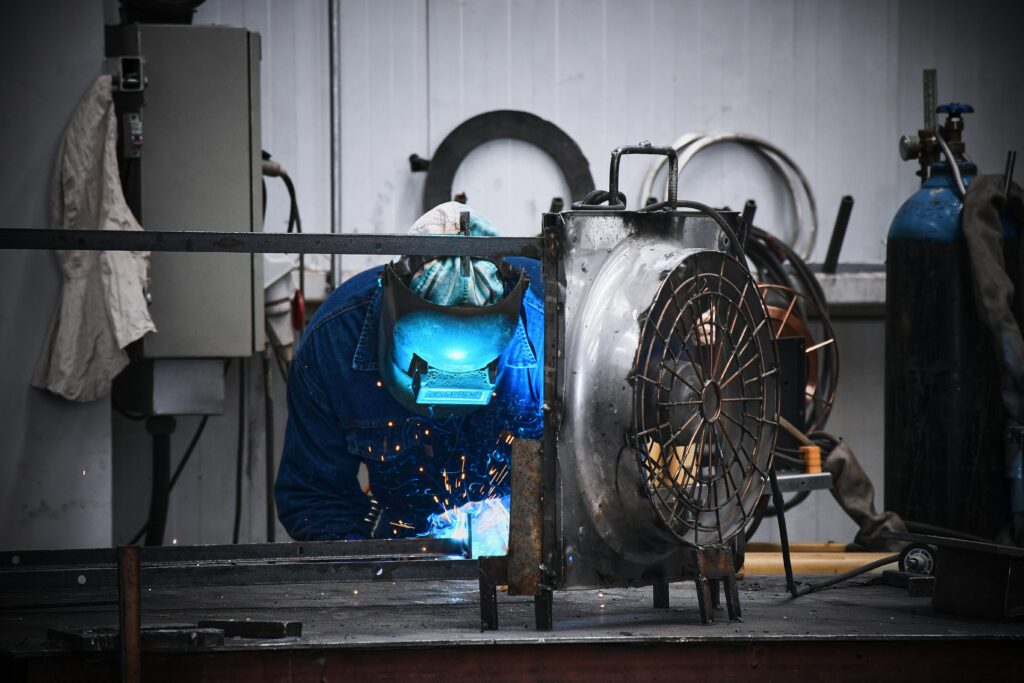
A primary hurdle in aerospace component manufacturing is joining thin-walled parts without causing warping or metallurgical damage. Traditional welding relies on melting the base metals. This intense, localized heat often creates a large heat-affected zone, leading to internal stresses and physical distortion.
In a high-precision assembly, even a fraction of a millimeter of movement can render a part unusable. Brazing solves this by heating the entire assembly uniformly. Because the base metals do not melt, the structural integrity of the components remains intact. This process allows for the creation of high-strength joints that can be engineered to withstand demanding vibration and thermal environments .
Common Brazing Applications in Aerospace
Brazing is utilized across almost every major system within an aircraft or spacecraft. Its versatility allows it to handle everything from cooling systems to structural supports.
Heat Exchangers
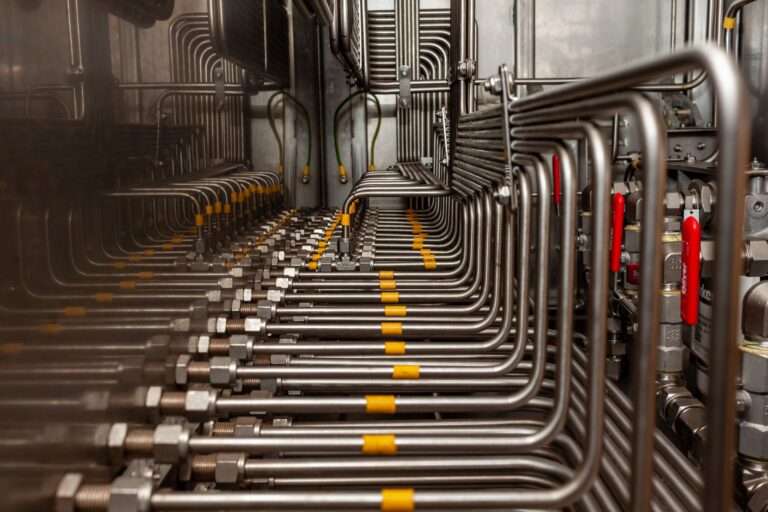
These are perhaps the most common application for aerospace brazing. Compact, high-efficiency heat exchangers require thousands of tiny joints between fins and plates. Brazing ensures these units remain leak-tight while handling massive temperature differentials.
Fuel Systems
Fuel manifolds and delivery lines must be reliably sealed. Precision brazing provides a clean, smooth internal diameter that does not restrict flow or create turbulence.
Turbine and Engine Components
Stators, nozzles, and cooling tubes within the engine core rely on nickel alloy brazing to survive the intense heat of combustion.
Sensor and Instrumentation
Small, delicate sensors used for navigation and monitoring require the gentle heating profile of brazing to protect sensitive internal electronics.
Structural Assemblies
Brackets and housings that support the airframe benefit from the high fatigue resistance provided by a well-executed brazed joint.
Fluid and Gas Handling
Hydraulic lines and pneumatic systems use brazed fittings to maintain pressure integrity over thousands of flight hours.
Navigating Material Complexity
Aerospace manufacturing frequently involves “difficult” metals that are notoriously hard to join. Stainless steel brazing is widely used for its corrosion resistance and strength. However, as temperatures rise within the engine core, nickel alloy brazing becomes necessary. These superalloys maintain their mechanical properties at temperatures that would cause standard steel to fail.
We also see an increasing need for aluminum brazing in lightweight structural components and heat sinks. The challenge lies in managing the tight temperature window required for aluminum. Successfully joining these materials requires precise control over the furnace atmosphere to remove oxides and ensure a perfect metallurgical bond.
The Importance of the Controlled Environment
The environment where the joining occurs is just as critical as the materials themselves. Controlled atmosphere brazing is used by the industry for a reason. By removing oxygen from the equation, we eliminate the risk of oxidation and surface contamination.
This results in joints that are clean, bright, and free of flux residue. For a procurement team, this means the parts arrive ready for the next stage of assembly without the need for aggressive post-process cleaning. This level of precision supports highly repeatable production, meeting the strict repeatability requirements of the aerospace industry.
Partnering with Franklin Brazing
At Franklin Brazing, we understand that aerospace components are never “standard” parts. Each assembly carries the weight of strict safety standards and high-performance expectations. We focus on providing the technical expertise and controlled manufacturing processes necessary to solve your most difficult joining challenges.
Our team works closely with engineers and procurement departments to ensure that the brazed joint provides the strength and reliability per your project requirements. We bring decades of industrial experience to every furnace cycle, ensuring your components are manufactured to meet customer and industry specifications.
Contact Franklin Brazing today to discuss your specific aerospace brazing requirements and see how our precision processes can strengthen your supply chain.
Disclaimer: Final component qualification and airworthiness approval remain the responsibility of the customer and applicable regulatory authorities.